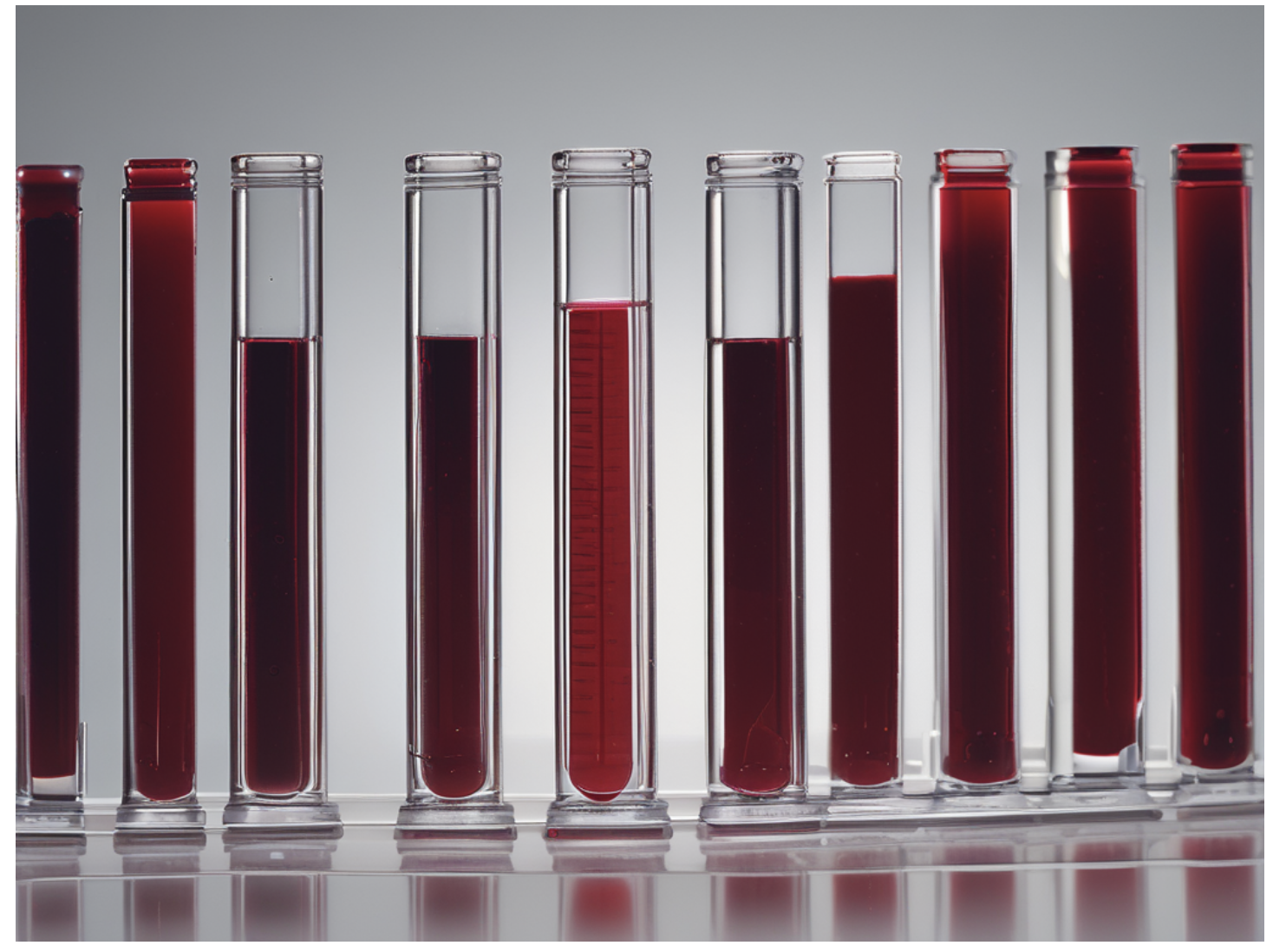
Biomarkers have been used for centuries as indicators of human health or for the diagnosis of pathological conditions. The term is incredible diverse and inclusive but most commonly refer to blood tests. Biomarkers have become essential tools in clinical medicine and brimming with potential. By one analysis, the global biomarker industry’s market size is estimated at $81 billion and expected to grow at a compound annual growth rate of 13% over the next five years. In a recent analysis, it was shown that as a group they are the most frequently ordered diagnostic procedure across healthcare settings. The promise of biomarkers rests in their potential to act as quantified and reproducible markers of physiological and pathological processes. As a diagnostic and prognostic modality, they augment the history and physical exam. If utilized as designed, they can expand the set of affordances available to physicians.
Emergency physicians rely heavily on biomarker testing. In a recent CDC survey, it was shown that nearly half of emergency department visits have biomarker testing performed during the visit. The most common reasons to visit the emergency department are abdominal pain, signs of an infection, and chest pain. Within those reasons for visit lies an enormous range of pathologies ranging from the ‘common and dangerous,’ and the ‘common and safe,’ to the ‘uncommon and dangerous,’ and the ‘uncommon and safe.’ Often these categories are highly contextual. They depend on patient specific sociomedical co-morbidities and risk-factors. Safe for one patient (or group of patients) does not automatically correspond to safe for another patient (or group of patients). Similarly, uncommon for the general population does not imply uncommon for a patient with salient risk factors. Risk even further expands when you consider temporality, because it can be presumptuous to extrapolate ‘safe-tomorrow’ from the appearance of ‘safe-now,’ as appearances can be transient or illusory.
Uncovering and identifying risk in such an environment is an arduous and unenviable task. In the service of this task, emergency physicians rely on biomarkers such as Complete Blood Count (CBC), Comprehensive Metabolic Panel (CMP), High Sensitivity Troponin, Lactate, and D-dimer. Although as group, these tests are utilized extensively, each of them are laden with pitfalls. Generally, they either lack specificity or require contextual cues to be optimally useful. High-sensitivity troponin can detect nanogram levels of troponin in the blood and is a sensitive indicator of a heart attack. However, it is also notoriously time-sensitive and requires sequential lab draws over three hours to adequately rule-out a major adverse cardiac event (MACE). Lactate is often elevated in sepsis and is a prognostic marker for severity of an infection, but is non-specific and elevated in a range of physiological processes. D-dimer is elevated in a pulmonary embolism, but is also non-specific. The white blood cell count or the erythrocyte sedimentation rate (ESR) are non-specific markers of inflammation, often elevated in a range of benign and dangerous, common and uncommon, inflammatory conditions.
In of itself, the lack of specificity is cumbersome and adds to the cognitive burden of the emergency physician, but interpretation of test results in the emergency department (ED) is particularly confounded by the typical ED workflow of ordering tests at presentation. In most EDs, patients undergo a triage screen, are assigned a triage risk-stratification score, and sometimes have a brief encounter with a ‘provider-in-triage.’ This cursory evaluation often triggers predetermined order sets that include biomarker testing. Patients who report chest pain have a troponin ordered, patients with abdominal pain have white blood cell count ordered, patients that screen positive for sepsis have lactates ordered. This practice is an adaptation in response to the volume pressures and metric-satisfying injunctions on the emergency departments. In essence, it is a solution to an ED overrun by patients that is optimizing patient care and consumerist metrics.
This would be an acceptable solution if not for the fact that test results are inherently probabilistic and subject to the Bayes theorem. Thus, interpretation of test results (posterior probability) is strongly dependent on priors (pretest probability). If a low-risk patient tests positive for a test, even if the test has high-sensitivity, their likelihood of the disease remains low and the probability of a false positive remains high. Unless a patient’s likelihood of having a disease is not accurately determined prior to ordering the test, the results of the test can be inactionable or afford actions incommensurate with the signal. For example, a negative d-dimer in a high-risk patient does not rule-out a pulmonary embolism, an elevated lactate in an inadequately screened patient triggers the order of broad-spectrum antibiotics. As stated earlier, ‘testing at presentation’ is designed to cope with volume pressures and to satisfy metrics such as wait-times, length-of-stay, and patient satisfaction scores. Even though testing low-risk patients does have the advantage of identifying outliers that would otherwise be missed without biomarker testing, this overwhelming false-positive bias imposes an insidious downstream burden of over-medicalization, over-diagnoses, over-treatment, and iatrogenesis on patients.
Biomarkers are essential tools in the physician toolkit as they serve as important markers of physiological and pathological processes. However, the development of reliable biomarkers is a challenging task that is severely constrained by evolutionary features of redundancy, parsimony, and variation (future essay). A comparison of the space of pathologies that require screening to the number of biomarkers available illustrates the inherent challenges of biomarker development. Furthermore, interpretation of biomarker testing is inherently probabilistic and best used in context. Ideally, testing should follow the history and physical exam, but due to the volume pressures on EDs and ED physicians, tests are ordered reflexively after cursory and inadequate screens. This adaptation – although advantageous in the short-term or superficially – is fraught with the insidious and mostly ignored consequences of false positives.
Thus, emergency physicians are almost equally dependent on the other diagnostic modality – radiological imaging – to supplement the history, physical exam, and clinical biomarkers (next essay).
To be continued…
Discover more from S-Fxn
Subscribe to get the latest posts sent to your email.

 S-Fxn
S-Fxn 
[…] scores are designed to integrate patient generated data such as the history, physical exam, and biomarker results to quantify and categorize risk. Both these tools are key components of ED risk-management […]
[…] to represent these pathological processes. Even if you only consider biology, the modern toolkit of biomarkers and radiological imaging afford only superficial legibility to the pathological processes that are […]
[…] interventions increasingly less traumatic and non-invasive. Advances in diagnostic imaging and biomarker testing have given us unparalleled access and insight into the anatomy, physiology, and pathology of the […]