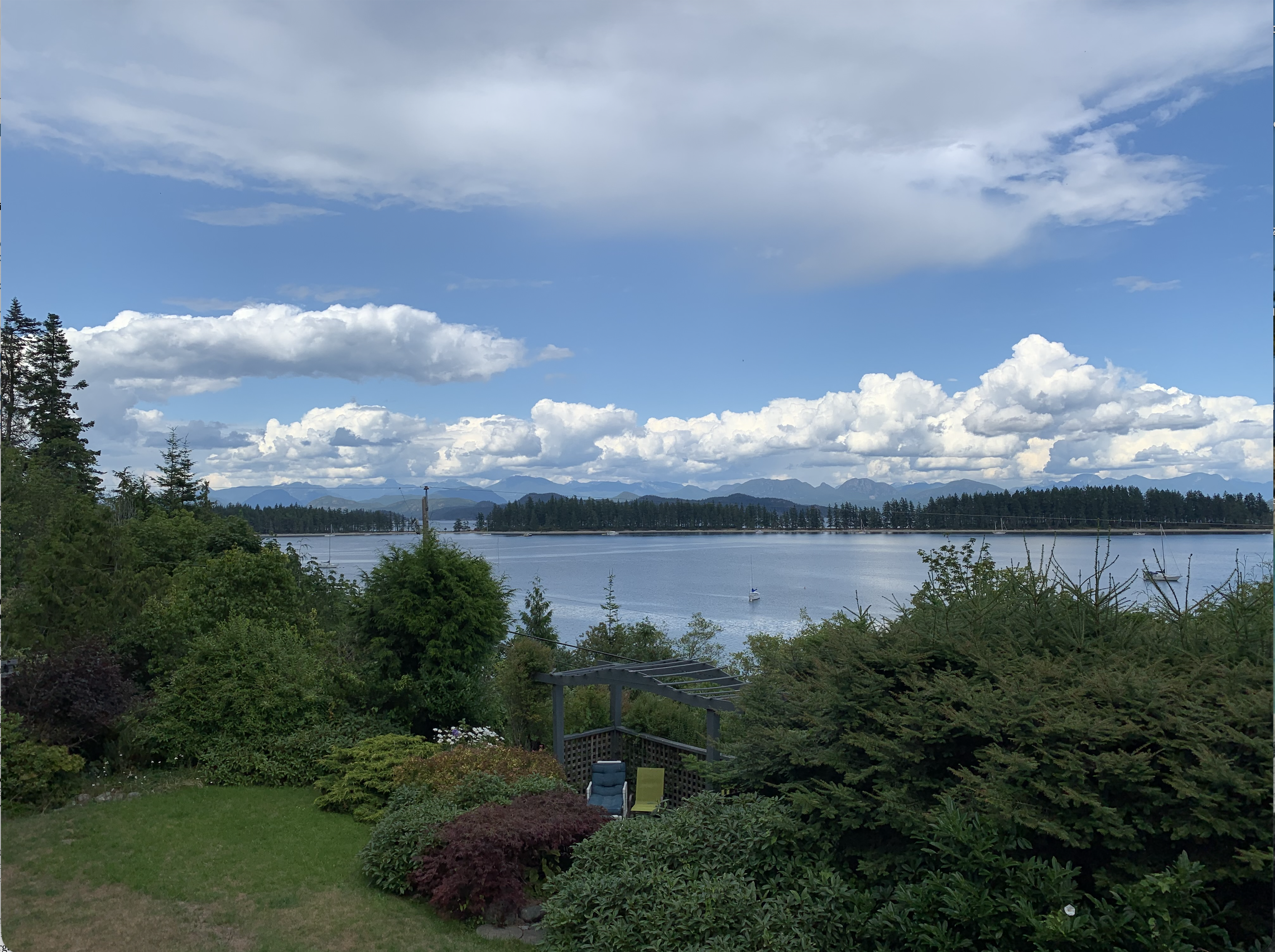
The philosopher of science Karl Popper created a framework of natural systems using the metaphors of clocks and clouds. In this framework, a clock-like system is one that is mechanical, linear, and predictable. Its organization can be decomposed into and recomposed from smaller components. On the other hand, a cloud-like system is one that is irregular, fuzzy, and emergent. Its individual components are difficult to map to a whole. With the success of the Newtonian revolution, it became a presupposition that “all clouds are clocks, even the most cloudy of clouds.” However, over time, it became increasingly apparent that in contrast to the clockwork universe, many natural systems lie between the two poles of clocks and clouds. They not only have features of both, but focusing on one or excluding the other leaves blind spots and explanatory gaps.
Nonetheless, medicine remains ensconced in the reductionist and mechanistic methodologies of enlightenment science. In the biomedical model, just like a clock is an assembly of components or a molecule is an assembly of atoms, an organ is an assembly of cells, and a body is an assembly of organs. The machine metaphor equates a heart to a pump, the brain to an information processor, the kidney to a filtration system, and muscles to levers. Additionally, just like one troubleshoots a broken machine, by getting to the bottom of the problem and identifying broken components, infected malware, or malfunctioning mechanism, pathology resides “below” within faulty genes, rogue cells, damaged tissues, and infected organs. Just like restoration includes repairing, replacing, or removing faulty components, “healing” means to cut, burn, poison, or kill the offending cell, tissue, or organ.
By most accounts and many measures, the biomedical revolution has been resoundingly successful. However, a more balanced perspective reveals its failures, insufficient returns on investment, blind spots, and explanatory gaps. For example, the promised “disease in your genes” genomics revolution never materialized. By-in-large, cancer remains rogue and recalcitrant to not only treatment but also causality. Patient cancer journeys are riddled with the specter of recurrence, the uncertainty of treatment efficacy, and the immense psychological and physical suffering of treatment. Despite advances in interventional cardiology, cardiovascular diseases remain the number one cause of mortality in the United States. Beyond the mostly crude population-based cardiovascular disease risk-scores, individualized prediction scores or prevention and disease reversal remain a pipe dream. Neurodegenerative and psychiatric diseases essentially remain a black box and are an increasing source of morbidity and mortality. The indiscriminate use of and desire for antibiotics is not only evolving antibiotic resistance but also altering the microbiome and affecting health in mostly unmeasured ways.
The biomedical model has also affected the practice of medicine. Whole-person, whole-body diseases are now isolated, fragmented, reduced into organs and single dimensional biomarkers treated by single organ specialists. Patients go see the cardiologist for heart disease, the nephrologist for kidney diseases, and the neurologist for brain diseases. However, chronic diseases cross organ-level boundaries, their effects cascade through body systems, and pharmaceutical interventions are hindered by universal biological properties of redundancy and reusability (future essay). Furthermore, every diagnosis, every medication interacts combinatorially to escalate patient complexity (upcoming essay). This requires synthesis and synthesizers precisely when primary care has been hollowed out by adopting industrialized assembly line frameworks of healthcare delivery built on superficial, simplified, and static metrics. In contemporary medicine, much cellular, physiological, psychological, phenomenological level complexity and heterogeneity is averaged out or unmeasured (future essay).
Just like other natural systems, the body is not only clock-like but also cloud-like. Across levels from the cells and organs to an entire body and even a community of bodies, it is a semi-open fractal-like system with fuzzy boundaries and interdependencies. It is a clock and a cloud. Where does the nervous system end and the gastrointestinal system begin? What effect does the heart have on the kidney or vice versa? What are the consequences of community or lack there of? What specialty – if not primary care – integrates those connections? In fact, even the metaphor of a cloud leaves gaps because unlike a cloud, biological systems self-organize, actively metabolize, directionally develop, evolve, self-maintain and self-preserve (next essay). Although, as Richard Feynman famously lectured, there is “plenty of room at the bottom,” (future essay) there is also plenty of room across and above (future essay).
Discover more from S-Fxn
Subscribe to get the latest posts sent to your email.


[…] it looked towards industrialization to organize its delivery. If medicine views the body as a machine, then healthcare delivers it from its equivalent of a factory or a store. In fact, over the last […]